Area Real Estate News & Market Trends

You’ll find our blog to be a wealth of information, covering everything from local market statistics and home values to community happenings. That’s because we care about the community and want to help you find your place in it. Please reach out if you have any questions at all. We’d love to talk with you!

March 26, 2026

A Guide to Finding Your Ideal 55+ High-Rise Community in San Francisco

SF Retiree looking at SF Luxury Condo locations

For several San Francisco homeowners in neighborhoods like Noe Valley or the Marina, their current social life is tied to the geography of their "big house": the neighbors they’ve known for decades, the local shopkeepers, and the familiar rhythm of the street.

The fear of social isolation after moving is real. However, San Francisco in 2026 offers a unique advantage for those "rightsizing" into luxury residences or high-rises. Moving doesn't mean shrinking your world; it means curating a more intentional one.

In this guide, we explore how to bridge the gap and build a vibrant, sophisticated social circle from scratch using San Francisco Social Clubs 55+, purpose-driven volunteering for retirees, and elite hobby collectives.

The Modern Private Club: Beyond the "Old Guard"

While San Francisco is home to legendary institutions like the Pacific-Union Club and the University Club, a new wave of social spaces has emerged that prioritizes conversation, culture, and "modern hospitality" over rigid tradition.

The Battery (Jackson Square)

The Battery (Jackson Square)

For those who value intellectual diversity, The Battery is the gold standard. It’s not just a place for a cocktail; it’s a "big clubhouse" for bright minds.

  • The Draw: A curated calendar of speaker series, rooftop concerts, and battery-powered their internal philanthropic circle where members pool resources to solve civic challenges.
  • The Social Win: Because the club encourages putting away devices in public areas, it facilitates old-school, face-to-face connections with people who share your curiosity.

Wingtip (Financial District)

10th Floor Bar Wingtip (Financial District)

Located in the historic Bank of Italy building, Wingtip offers a more "bespoke" atmosphere.

  • The Draw: An in-house barber shop, a massive wine cave, and a private tailoring shop.
  • The Social Win: It attracts a sophisticated crowd (average age ~45-60) who value craftsmanship and quiet luxury. It’s the perfect spot for a "Lock & Leave" resident to host a guest or meet a peer for a game of billiards.

Town & Country Club (Union Square)

Town & Country Club (Union Square)

For women looking for a historic yet vibrant community, the Town & Country Club is a sanctuary.

  • The Draw: Famous for its bridge games, Mah-Jongg afternoons, and elegant supper clubs.
  • The Social Win: It offers a "multigenerational" connection point, allowing you to mentor younger professionals while building deep bonds with peers who have called the city home for decades.

Not sure which club fits your vibe? Our 2026 guide breaks down initiation fees, waitlist times, and the 'unspoken' culture of SF’s top 5 social spaces. Take a look at the table below.

SF Private Club Access Cheat Sheet 2026SF Private Club Access Cheat Sheet 2026

Active Hobby Collectives: The "Golden Thread" of Shared Interests

The fastest way to build a new circle is through a shared pursuit. San Francisco’s unique geography and culture provide world-class "classrooms" for your next chapter.

Sailing the Bay: St. Francis Yacht Club

The Bay is your backyard, and the St. Francis Yacht Club is its most prestigious gateway.

St Francis Yacht Club (Marina)

The Angle: Even if you aren't a seasoned sailor, the club is a "sponsor-driven" community where the shared love of the water creates an immediate bond.

The Win: Volunteering for on-the-water race committees or attending the "Opening Day on the Bay" festivities provides an instant social calendar that spans the entire year.

The Napa Wine Collectives

For many SF residents, "community" extends 60 miles north. High-end wine collectives like Vintner’s Collective or the Napa Valley Winery Exchange (Union Square) offer a bridge to the valley.

Vintner's Collective, Napa

The Angle: These groups host exclusive, member-only tastings and "barrel-tasting" trips to boutique Napa producers that aren't open to the public.

The Win: It’s a low-pressure way to meet other bon vivants who likely live in your same high-rise or neighborhood.

Search for Lock & Leave Residences Near Your Hobbies

High-Impact Volunteerism: Purpose-Driven Connection

Isolation often stems from a lack of "daily purpose." Shifting your professional skills toward high-end philanthropy is a powerful way to meet like-minded, high-achieving peers.

The Commonwealth Club World Affairs

This isn't just about listening to lectures; it’s about participating.

  • The Opportunity: Join the "Grownups Member-led Forum" or volunteer for program planning committees.
  • The Win: You aren't just "attending"; you are helping shape the intellectual discourse of the city, working alongside other retired executives and community leaders.

Civic Bridge & The Parks Alliance

If you have $2M+ in equity and a lifetime of professional "genius," organizations like Civic Bridge allow you to partner with the City to solve complex challenges.

  • The Opportunity: Mentoring youth through the SF Foster Grandparent program (AmeriCorps Seniors) or joining the Civil Grand Jury.
  • The Win: These roles provide a structured "collegial" environment, replacing the social structure of the office with a new, mission-driven team.

The "Stairway to Community": Moving into the High-Rise

Residents Only Events at SF Luxury High-Rises

The biggest surprise for those right-sizing into buildings like 181 Fremont or The Harrison is that the building itself is a social circle.

Unlike a single-family home, where you might only see your neighbor when taking out the trash, high-rise living includes:

  • The "Lobby Screen": Casual, daily interactions with neighbors in the elevators or at the valet.
  • The Sky Lounge: Most residents at The Harrison treat the "Uncle Harry’s" lounge as their shared living room, making it easy to turn a chance encounter into a dinner invitation.
  • Resident-Only Events: From holiday parties to yoga classes, the building management acts as your social director.

Worried about the social logistics of a move? Let’s map out your transition.

Call me at (415) 412-1977

Conclusion: Your Best Years are Socially Intentional

The "Upside-Downsize" or a move to a "Lock & Leave" high-rise isn't the end of your social life—it’s the beginning of a more curated one. By shedding the maintenance of a large home, you gain the time and energy to invest in the clubs, causes, and hobbies that truly reflect who you are today.

If you’re worried about leaving your neighbors behind, remember: a move in San Francisco is rarely more than a few zip codes away. You aren't losing old friends; you're just gaining a more beautiful place to host them.

In 15 minutes, we'll identify the best buildings for your lifestyle and the clubs that will welcome you home.

Let's Meet for Coffee!

Thinking About Buying or Selling in San Francisco?

Rebecca can answer your questions, share current listings and recent sales, and help you plan your next move.

Contact Rebecca  or call (415) 412-1977

March 26, 2026

Downsized Lifestyle in the Bay Area: Choosing the Right Home For You

Downsized Lifestyle in the Bay Area: Choosing the Right Home For You

Many San Francisco homeowners understand the family residence isn't just real estate—it’s an archive of decades of memories. However, there comes a tipping point where a large home stops being a sanctuary and starts becoming a set of 'Golden Handcuffs.' The most successful transitions happen when you stop viewing downsizing as a loss of space and start seeing it as a gain of freedom.

The core challenge is often evident when transitioning from a single-family house to a smaller living space. The key to success is choosing a housing type and a floor plan where quality of life and functionality are prioritized over mere square footage.

To find that perfect balance, your search should be filtered through three critical lenses:

  1. Flow Over Footprint: Look for 'Great Room' concepts where the kitchen, dining, and living areas merge seamlessly. In a smaller home, hallways are wasted space; open transitions create the airiness of a larger estate.
  2. The 'Primary' Priority: Since you will spend 80% of your time in the primary suite and the main living area, prioritize a floor plan that over-invests in these zones while 'editing' guest rooms down to efficient, high-end guest suites.
  3. The Outdoor Extension: In San Francisco, a private terrace or a 'loggia' isn't just a balcony—it’s an extra room. A 1,500-square-foot condo with a 300-square-foot terrace often feels more expansive than a 2,000-square-foot house with no outdoor flow.

Understanding these crucial aspects helps you evaluate the space inside your front door, but the value of a downsized move is often found in what lies just outside it. Choosing between a traditional townhome and a modern high-rise is more than a design choice—it is a strategic decision about how much 'home management' you want to retain.

Condos vs. Townhomes vs. Boutique Buildings

In San Francisco's luxury market, downsizers typically opt for one of three distinct housing styles. Below are the types, with each offering a unique balance of privacy, service, and convenience:

Condos vs. Townhomes vs. Boutique Buildings

Floor Plans & Features That Matter

Floor Plans & Features That Matter

A successful downsize depends entirely on the design of the smaller space. The best luxury residences are engineered to feel expansive and functional, even if the total footprint is smaller.

Downsizers should prioritize the following features:

1. Open-Plan Living

The Upgrade: Look for seamless transitions between zones, often marked by integrated flooring or subtle ceiling treatments. This eliminates the "cramped" feeling and makes the home ideal for entertaining guests.

2. Efficient Kitchen Design

The Upgrade: Prioritize highly functional kitchens over sheer size. Explore professional-grade, fully integrated appliances, large islands that double as prep and dining spaces, and smart, custom cabinetry that utilizes vertical space.

3. Dedicated Storage Solutions

The Upgrade: Look for units that include a dedicated, separate storage cage in the building's basement, as well as interior features such as walk-in closets, hidden utility closets, and built-in shelving systems.

4. Private Outdoor Space

The Upgrade: Look for large, usable balconies that can accommodate seating and dining, or, ideally, terraces that offer enough space for gardening and true outdoor living.

5. Accessibility Features

The Upgrade: Focus on single-level floor plans, wide doorways and hallways, easily accessible entry/exit points, and buildings with multiple, reliable elevators. (Mission Bay often excels in this due to its new construction.

Schedule a Private Tour of Curated Downsized Residences or browse a private gallery of San Francisco’s top-tier downsizing residences, specifically vetted for flow, accessibility, and investment value.

Financial Benefits of Downsizing: What Else You Need to Know

Financial Benefits of Downsizing: What Else You Need to Know

For most long-time San Francisco homeowners, the decision to downsize from a single-family home to a luxury condo is arguably the single most powerful financial move. It is a calculated strategy to convert illiquid, high-maintenance home equity into flexible, tax-advantaged capital.

Unlocking Decades of Home Equity

The most immediate and significant financial benefit is the massive injection of liquidity.

  • The Equity Windfall: Due to decades of appreciation under Proposition 13, many San Francisco homeowners are "house-rich but cash-poor." Selling a $4M single-family home and purchasing a $2 million luxury condo in South Beach instantly frees up $2 million in cash. This amount minus transaction costs can be used to fund retirement downsizing, travel, or investments.
  • Federal Capital Gains Exclusion: This benefit can dramatically reduce the federal tax burden on the sale of the primary residence:
  • Up to $250,000 in profit is excluded for single filers.
  • Up to $500,000 in profit is excluded for married couples filing jointly.
  • Requirement: You must have owned and lived in the home for at least two of the last five years.

Not sure how the math works for your specific home?

Call (415) 412-1977 to get my simplified Prop 19 worksheet to estimate your potential tax savings in under five minutes.

The Game-Changer: Proposition 19 (Property Tax Portability)

California's Proposition 19 (passed in 2020) is the cornerstone of the financial case for downsizing for eligible homeowners. It allows homeowners (aged 55 and older, severely disabled, or disaster victims) to keep their low property tax rate, providing a major annual savings.

  • Tax Base Transfer: Prop 19 allows you to transfer your existing low, Prop 13-protected tax-assessed value (tax base) from your sold home to your new replacement condo, regardless of where the new property is located in California.
  • Three-Time Use: This benefit can be used up to three times in a lifetime, giving downsizers flexibility to move as their needs change.
  • How it Works (Even when Upsizing in Price): If you sell your old home and buy a new home for the same price or less, you transfer your tax base without adjustment. If the replacement home is more expensive, the tax base is adjusted to include only the difference in value. Thus, taxes are far lower than if the new property were fully reassessed at market value.

EXAMPLE:

You sell your family home for $3 million (tax base: $400,000). You buy a luxury condo for $2 million. Your new condo’s tax base remains $400,000, saving you tens of thousands of dollars annually.

Would you like to speak to a tax advisor or an estate planning attorney?

Experts in these fields are available, and I can assist you in getting one.

Reduced Carrying Costs and Maintenance

Downsizing fundamentally shifts ongoing household expenses. Consider the following:

Reduced Carrying Costs and Maintenance Table

Estate Planning and Generational Impact (A Crucial Caveat)

While Proposition 19 (Prop 19) offers immediate benefits, it also has a significant impact on generational wealth transfer that all downsizers must consider:

  • New Inheritance Limits: Prop 19 limits the ability of children or grandchildren to inherit the parent's low property tax base. The lower tax base is only retained if the child makes the generational home their primary residence, and only up to a certain value threshold.
  • The Reassessment Risk: If the child inherits the home and uses it as a rental or second home, the property will be reassessed to its current market value. This results in a sudden and dramatic property tax hike for the heirs.

Estate Planning and Generational Impact (A Crucial Caveat)

Unlock My Home's Equity: Get a Free Valuation

Conclusion

Downsizing in San Francisco is rarely just about moving to a smaller floor plan; it is about expanding your life. By trading the 'Golden Handcuffs' of a high-maintenance family estate for the streamlined elegance of a luxury high-rise, you aren't just protecting your wealth—you are reclaiming your time.

Whether your next chapter is defined by the lock-and-leave convenience of South Beach or the quiet, curated sophistication of a Nob Hill boutique building, the goal is the same: to ensure your home finally serves you, rather than the other way around. The equity is there, the tax advantages are ready, and the lifestyle you’ve earned is waiting.

Ready to see what your 'Equity Jackpot' looks like?

Let’s sit down for a confidential consultation to map out your 90-day transition, from valuation to your new front door.

Text COFFEE to (415) 412-1977.

Note: Some images on this page were generated using Google Gemini.

Thinking About Buying or Selling in San Francisco?

Rebecca can answer your questions, share current listings and recent sales, and help you plan your next move.

Contact Rebecca  or call (415) 412-1977

March 25, 2026

From Japantown to Potrero Hill: Your Neighborhood-by-Neighborhood Guide to Spring 2026 in San Francisco

From Japantown to Potrero Hill: Your Neighborhood-by-Neighborhood Guide to Spring 2026 in San Francisco

As the fog lifts off Twin Peaks and the first poppies push through the hillsides of the Marin Headlands, San Francisco does what it does every spring: it wakes up. The neighborhoods fill with music, the parks fill with people, and the city's calendar fills with the kind of events you really can't find anywhere else on earth. A sunrise service on a fog-draped mountain. Drag nuns presiding over Easter at a sun-soaked park. Taiko drums echoing down a street that has remained one of only three Japantowns left in the country.

Whether you've lived here for thirty years or you're visiting for the first time, this is your complete guide to making the most of spring 2026 in San Francisco — neighborhood by neighborhood, weekend by weekend.

🆕 Don't Miss: Saint Stupid's Day Parade — Financial District / Downtown

April 1, 2026 | Noon | Free

A uniquely San Francisco April Fools' tradition — a "wonderfully idiotic" parade through downtown with doggie diner head floats, chants of "No More Chants," silly costumes, and all the meaningless fun you'd expect from a city filled with fun weirdos. It is completely absurd. It is completely San Francisco. It opens April in the best possible way.

🐣 Easter Weekend in San Francisco: April 3–5, 2026

Easter Sunday falls on April 5 this year.

1. Sisters of Perpetual Indulgence: Easter in the Park — The Mission / Noe Valley Border

Easter Sunday, April 5 | 10 AM–4 PM | Mission Dolores Park, 19th & Dolores | Free

Mission Dolores Park

The Sisters of Perpetual Indulgence host their Annual Easter in the Park celebration on April 5, 2026, marking their 47th Anniversary. Festivities begin with Children's Easter at 10 AM, followed by the main stage celebration from noon to 4 PM on the north end of Dolores Park near the tennis courts. The Hunky Jesus Contest takes place at 3 PM.

The event features drag performances, live music, and the legendary Easter Bonnet, Foxy Mary, and Hunky Jesus contests — hosted by Sister Roma, Peaches Christ, and Honey Mahogany, with performers including Flamy Grant, Per Sia, Papi Churro, and Alotta Boutte.

Dolores Park sits on the border of the Mission and Noe Valley, with a north-facing slope that frames Downtown SF like a painting. On a clear April afternoon, it is the best seat in the city. Walk, bike, or take MUNI — the J line stops at 18th and 20th. Neighborhood parking is extremely limited.

2. BYOBig Wheel Race — Potrero Hill

BYOBig Wheel Race — Potrero Hill

Easter Sunday, April 5 | 2–5 PM | Vermont & 20th Streets | Free to watch
Dozens of contestants risk humiliation and serious injury racing their Big Wheels — those giant plastic tricycles from childhood, no rubber wheels allowed — down the crazy curvy Vermont and 20th Streets, the actual curviest street in San Francisco, on Easter Sunday, all for glory.

Kids 12 and under race from 2–3 PM, followed by adults from 3–5 PM. Costumes are not required but are essentially mandatory in spirit. Come for the chaos, stay for the community. And take Muni — Potrero Hill parking on Easter Sunday is a losing proposition.

Potrero Hill is one of SF's sunniest, quietest residential neighborhoods, with hilltop parks offering some of the most panoramic views in the city.

3. Easter Bonnet Parade — North Beach / Washington Square Park

Easter Sunday, April 5 | 11 AM–2 PM | Washington Square Park | Free with RSVP

San Francisco's elegant Easter Bonnet Parade takes over Washington Square Park from 11 AM to 2 PM. Picnics are encouraged. North Beach (my favorite neighborhood!) on a spring Sunday — with Saints Peter & Paul Church presiding over the square and the smell of fresh bread from Liguria Bakery still hanging in the air — is one of the most purely pleasant afternoons San Francisco has to offer.

4. Easter Sunrise Service — Mount Davidson / West of Twin Peaks

Easter Sunday, April 5 | 6:30 AM | Mount Davidson Park

This nondenominational sunrise service beneath Mount Davidson's 103-foot cross has been a San Francisco tradition for nearly a century. Arrive early and hike the wooded trail to the summit in the dark — by the time the sun clears the East Bay hills, the view stretches from the Bay to the Pacific. Bring layers. This is one of the most quietly extraordinary ways to spend Easter morning in the city.

5. Egg Hunts & Family Fun — SoMa, Excelsior, and Salesforce Park

Egg Hunts & Family Fun — SoMa, Excelsior, and Salesforce Park

Head to Yerba Buena Gardens in SoMa for their annual Egg Hunt on Saturday, March 28 — egg hunt, face painting, craft stations, and more. On April 4, options include the Crocker Amazon Park Spring Fling in the Excelsior (11 AM–4 PM, 799 Moscow Street) — with carnival rides, crafts, live music, and face painting — and the TIJA Egg Hunt at Salesforce Park in the Financial District (10 AM–1 PM), an elevated urban garden park that feels like discovering a secret above the city streets.

Saturday, April 4 | Various locations

🍳 Easter Brunch: Where to Celebrate in Style

Laurel Court at the Fairmont Hotel — Nob Hill

There is no more cinematic Easter brunch setting in San Francisco than the Laurel Court, tucked inside the Fairmont's grand Nob Hill lobby. The Easter buffet features Dungeness crab, a carving station, and pastries that will ruin you for pastries anywhere else. The neighborhood sits at the top of the world — or at least the top of California Street — and on Easter Sunday, it feels that way.

Garden Court at the Palace Hotel — SoMa

The Garden Court at the Palace Hotel serves brunch beneath a stunning glass dome that has been impressing guests since 1909. The Easter buffet leans into seafood and classic preparations. This is a room grand enough to make a simple mimosa feel like an occasion. SoMa has transformed dramatically in recent decades, and the Palace Hotel remains its most timelessly elegant anchor.

Villon at SF Proper Hotel — Civic Center / Hayes Valley

Villon's Easter brunch features traditional fare with chef-driven twists, a leg of lamb carving station, and handcrafted libations — $125 per person, $65 for children. The Proper Hotel's design-forward interiors make this one of the most stylish Easter tables in the city. Perfectly positioned for those who want to walk to Davies Symphony Hall for an afternoon Bach concert.

Palm House — Marina / Cow Hollow

Palm House offers a Caribbean-inflected brunch on both Saturday and Sunday starting at 10:30 AM. Coconut French toast, tropical cocktails, and an atmosphere that feels like a warm-weather holiday even if the fog rolls in off the Bay. One of the most reliably festive spots in the Marina — and the neighborhood's Chestnut Street brunch scene gives you plenty of pre- and post-brunch strolling to do.

Zazie — Cole Valley

This intimate Cole Valley landmark is beloved for its eggs benedict, Mayan Mochas, and Miracle Pancakes with lemon curd and strawberries. Reserve a back patio seat if at all possible. Cole Valley is one of SF's most charming micro-neighborhoods: quiet streets, independent bookshops, and the kind of morning that makes you want to linger over a second cup of coffee. Then walk up the hill into the panhandle and keep going.

🌸 Spring Events Around the City

1. Northern California Cherry Blossom Festival — Japantown / Western Addition

April 11–12 and April 18–19, 2026 | Free | Post Street, Laguna to Fillmore

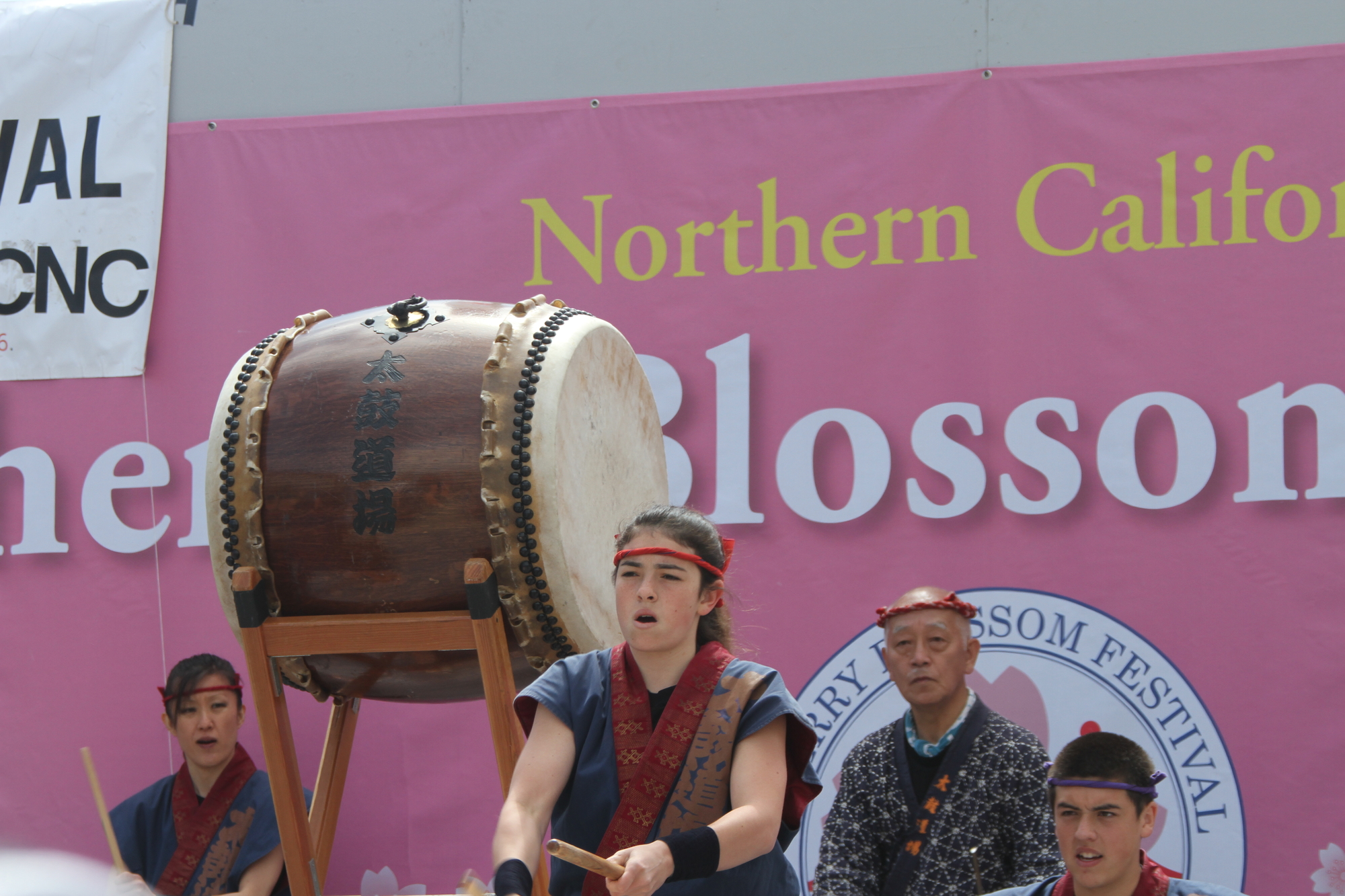
Taiko drummers performing in Japantown for the Cherry Blossom Festival

Now in its 59th year, the Northern California Cherry Blossom Festival draws over 250,000 visitors to Japantown across four days of cultural performances, arts and crafts vendors, food booths, and family activities.

San Francisco's Japantown sits at the western edge of the Fillmore District — one of the city's most historically layered neighborhoods, once known as the "Harlem of the West" for its jazz scene, now home to some of the finest ramen, sake bars, and izakayas in the Bay Area. The festival is its grandest annual statement, and it earns every bit of the attention.

Scheduled events include bonsai and doll-making lessons, tea ceremonies, Japanese dance, and pet-owner meet-ups, along with special ticketed receptions and spiritual ceremonies. Don't miss the Grand Parade on Sunday, April 19, which winds from Civic Center Plaza through the Fillmore corridor and into the heart of Nihonmachi. The Taru Mikoshi — a massive hand-carried Shinto shrine paired with sake barrels — is one of the most photographed moments of the entire San Francisco spring season. Come hungry: street food vendors line Post Street with takoyaki, onigiri, and matcha everything.

After the festival, wander down Buchanan Street's brick mall, or duck into Nijiya Market for snacks to take home.

2. SF Symphony: Bach's Easter Oratorio — Civic Center / Hayes Valley

April 9–11, 2026 | Davies Symphony Hall, 201 Van Ness Ave.

Davies Symphony Hall

Canadian maestro Bernard Labadie conducts the first-ever SF Symphony performances of Bach's Easter Oratorio, a spectacular celebration. An Inside Music Talk is onstage one hour prior to each performance. For those who want a more contemplative Easter experience, this is your weekend.

Davies Symphony Hall anchors Hayes Valley, one of the most walkable and design-forward neighborhoods in the city. Grab dinner beforehand on Hayes Street — Absinthe, Rich Table, or Ordinaire for wine — and make an evening of it.

3. Renegade Craft Fair — Marina District / Fort Mason

March 28–29, 2026 | Fort Mason Center, Building C | $5 suggested donation

One of the country's most beloved indie craft fairs fills Fort Mason's sprawling historic warehouses with over 250 independent artists, ceramicists, textile designers, printmakers, and small-batch food producers. This is not a tourist trinket market. It's where serious collectors and curious browsers discover the next generation of Bay Area makers.

Fort Mason anchors the northeastern corner of the Marina, a neighborhood known for its Edwardian flats, Chestnut Street boutiques, and arguably the city's most reliable sunshine on a spring afternoon. After the fair, walk the waterfront toward the Golden Gate. The views alone are worth the trip.

4. Cesar Chavez Day Parade & Festival — The Mission

April 11, 2026 | Free | Mission District

The largest event in Northern California honoring labor and civil rights leader Cesar Chavez, featuring a parade, live performances, and a lowrider car show.

The Mission is San Francisco's most visually alive neighborhood — every block a mural, every corner a taqueria, every weekend a reason to stay. The Chavez festival is one of the neighborhood's proudest annual traditions. Make a full day of it: parade in the morning, lunch on 24th Street, and an afternoon browsing Dandelion Chocolate or Bi-Rite Market.

5. Earth Day & World Naked Bike Ride — Golden Gate Park / Citywide

April 18–22, 2026 | Various locations | Free

San Francisco goes all-in for Earth Week, with events scattered across every neighborhood. The most talked-about is the World Naked Bike Ride through Golden Gate Park on April 18 — a joyful, body-positive protest and celebration that has become one of the city's most quintessentially SF traditions. Earth Day proper (April 22) brings sustainability pop-ups, clothing swaps, and community workshops throughout the city, with Yerba Buena Gardens in SoMa serving as a family-friendly hub.

Save the date for Rebecca's 4th annual Earth Day paper-shredding event in the Outer Richmond

🌷 Spring Is Here. Go Find It.

San Francisco in spring is a moving target. The fog retreats, the hills go green, the neighborhoods wake up and remember what they are. From the taiko drums reverberating down Post Street in Japantown, to the shriek of plastic wheels on Vermont Street's hairpin turns, to the deep quiet of Mount Davidson at sunrise — this city offers a spring that cannot be replicated anywhere else on earth.

Gather your people. Pick a neighborhood. Go be part of it. 🌸🐣

💌 Planning to sell this spring?

San Francisco's spring real estate market is one of the most active of the year — and falling in love with a neighborhood is often the first step to making it home. Stay tuned for our Spring 2026 Market Update in the next newsletter.

👉 Take a look at what’s happening throughout April in San Francisco and start planning your next weekend.

Thinking About Buying or Selling in San Francisco?

Rebecca can answer your questions, share current listings and recent sales, and help you plan your next move.

Contact Rebecca  or call (415) 412-1977

March 24, 2026

The Lock & Leave Lifestyle: San Francisco’s Best Luxury High-Rises for Boomers

The Lock & Leave Lifestyle: San Francisco’s Best Luxury High-Rises for Boomers

"Lock & Leave" Lifestyle: A Definitive Guide to Luxury High-Rises in SF

Owning a substantial single-family home in neighborhoods like St. Francis Wood, Sea Cliff, or Presidio Heights was the ultimate marker of San Francisco success. But for today’s active "empty nesters," that 4,000-square-foot legacy home can begin to feel less like an asset and more like an anchor.

Between the constant maintenance of a hundred-year-old Victorian, the rising costs of private security, and the persistent "mental load" of managing a large property, many San Francisco homeowners are looking for a different kind of luxury: Freedom.

This is the "Lock & Leave" lifestyle. It is a strategic move for those who plan to spend three months of the year in Tuscany, winters in Palm Springs, or extended time visiting grandchildren in the East Bay, all while knowing their primary residence is the most secure, well-managed environment in the city.

The Prop 19 Catalyst: Your Financial Permission Slip

Before we discuss the amenities of a luxury condo, we must address the "why." Traditionally, San Francisco boomers were "tax-locked" into their family homes. Selling meant a massive jump in property taxes at their new residence.

The Game Changer: Under California’s Proposition 19, homeowners 55+ can now sell their primary residence and transfer their low property tax basis to a new home of any value, anywhere in California, up to three times.

This means you can sell your $4M family home in the Richmond District, buy a $3.5M ultra-luxury sky-suite in SoMa or Yerba Buena, and keep your 1990s-era property tax bill. This financial "permission slip" makes the Lock & Leave lifestyle not just a dream but a sound fiscal strategy.

The 24/7 Concierge: Your Private Household Staff

The Lock & Leave Lifestyle: San Francisco’s Best Luxury High-Rises for Boomers

In a traditional home, you are the CEO, the janitor, and the head of security. In a luxury high-rise like 181 Fremont, you have a professional team to handle the "friction" of life.

The "White-Glove" Buffer

A true Lock & Leave building doesn't just have a doorman; it has a lifestyle concierge.

  • Package and Grocery Management: When you are traveling, your refrigerated deliveries aren't left on a porch; they are stored in cold storage by staff.
  • In-Home Services: Need a plumber while you’re in London? The concierge coordinates the entry, supervises the work, and locks up afterward.
  • Travel Coordination: From arranging private town cars to SFO to ensuring your favorite bottle of wine is chilled upon your return, the staff at buildings like The Harrison or Four Seasons Private Residences provides a level of service that rivals the world’s best hotels.

Stop guessing where you'll fit in. We’ve mapped the East Bay neighborhoods that actually feel like 'Noe Valley with more sun.' Get the 2026 City-Expat Vibe Map by sending me a text at (415) 412-1977.

Fortified Peace of Mind: Security Protocols

The Lock & Leave Lifestyle: San Francisco’s Best Luxury High-Rises for Boomers

For boomers who spend months away from home, security is the #1 priority. San Francisco’s premier high-rises are designed as "vertical fortresses" that offer a level of protection a street-level home simply cannot match.

The Multi-Layered Security Shield

  1. Controlled Access: Entry is managed through biometric scanners, encrypted fobs, and 24-hour staffed lobbies. You no longer worry about "porch pirates" or unauthorized visitors.
  2. Internal Monitoring: Sophisticated leak-detection systems and fire suppression are standard. In a single-family home, a burst pipe while you’re in France is a catastrophe; in a managed high-rise, it’s intercepted by the building’s 24/7 engineering team before it hits your floor.
  3. The "Lobby Screen": Your mail, deliveries, and guests are vetted before they even reach the elevator. This "buffer zone" is the ultimate luxury for those who value privacy and safety.

Zero-Landscaping: The Freedom of "Non-Ownership"

One of the most disruptive shifts in the Lock & Leave mindset is the transition from private gardens to shared masterpieces.

In your family home, "landscaping" meant hiring gardeners, worrying about irrigation leaks, and sweeping leaves. In a building like Lumina or MIRA, your "backyard" is a professionally curated rooftop lounge or a sky-terrace with 360-degree views of the Bay Bridge and the Salesforce Tower.

You get the greenery and the fresh air without the "Honey-Do" list. When you leave for three months, you don't have to wonder if the roses are being watered—you simply turn off the lights and walk out the door.

Don't fall in love with a home you can't insure. Provide any East Bay zip code, and I'll run a 'Bedrock Audit' to check standard insurance eligibility before you tour.

Book an Appointment now!

Designing the High-Rise for "Active Aging"

The Lock & Leave Lifestyle: San Francisco’s Best Luxury High-Rises for Boomers

Modern San Francisco towers are built with "Universal Design" in mind, making them far more "right-size friendly" than a multi-story Victorian.

  • Single-Level Living: No more stairs. From the valet parking to your bedroom, your entire life exists on a flat, accessible plane.
  • High-Seismic Engineering: High-rises like 181 Fremont are among the safest structures in the world, built with state-of-the-art dampening systems that outperform traditional wood-frame houses in a seismic event.
  • Wellness Centers: Why drive to a gym when you have a world-class fitness center, lap pool, and spa three floors below your living room?

The Social Component: A Community of Peers

Downsizing often carries a fear of isolation. Conversely, the Lock & Leave lifestyle often increases social interaction.

Luxury buildings curate "Residents Only" events—wine tastings, speaker series, and holiday soirées. You are surrounded by peers who are in the same stage of life: successful professionals and retirees who value travel, culture, and ease of living. You aren't just buying square footage; you are buying into a curated neighborhood in the sky.

Take a look at the "High-Rise Comparison Table" below, which moves the conversation from abstract "luxury" to the concrete details that matter most to San Francisco "empty nesters" who are weighing their options.

The Elite 3: San Francisco’s Premier Lock & Leave Residences

The Lock & Leave Lifestyle: San Francisco’s Best Luxury High-Rises for Boomers

Strategic Insights

  • For the Ultra-Private: 181 Fremont is the choice. With only 55 homes starting 500 feet in the air, it offers the highest level of "anonymity" and seismic peace of mind.
  • For the Socialite: The Harrison is unbeatable. Between the Ken Fulk-designed "Uncle Harry's" lounge and the weekend pastry service in "The Pantry," it is designed for residents who want a sense of neighborhood within their building.
  • For the Global Collector: Four Seasons 706 Mission offers a level of lifestyle curation (via their Art and Wine programs) that is unmatched by any other residential-only tower.

Conclusion: The Luxury of Less

The "Lock & Leave" lifestyle isn't about "giving up" your home; it's about gaining the world. By leveraging Prop 19 and moving into one of San Francisco's premier managed residences, you are choosing to spend your time on experiences rather than maintenance.

If you find yourself staying in San Francisco only because you’re afraid to leave your house unattended, it’s time to consider the view from the top.

Moving from the City to the East Bay doesn't have to mean a massive tax hike. See how to carry your SF tax base with you to a luxury single-story home.

Call me at (415) 412-1977!

Note: Some images were generated using Google Gemini

Thinking About Buying or Selling in San Francisco?

Rebecca can answer your questions, share current listings and recent sales, and help you plan your next move.

Contact Rebecca  or call (415) 412-1977

Posted in Luxury Real Estate
March 23, 2026

Aging in Place San Francisco Homes

Aging in Place San Francisco Homes

Aging in place San Francisco homes are no longer just about comfort. They are about making thoughtful, strategic decisions that allow you to stay in your home while protecting what may be one of your most valuable assets. This becomes even more important as you begin exploring downsizing strategies alongside long-term planning.

In a city where many homes are multi-level, architecturally unique, and located in highly desirable neighborhoods, remodeling for aging in place is not simply a design decision. It is a long-term investment decision. According to the National Institute on Aging, aging in place means being able to live in your own home safely, independently, and comfortably, regardless of age or ability.

The goal is not just to stay.
The goal is to stay well, and still own a home that future buyers will compete for.

What Strategic Remodeling Really Means in San Francisco

Strategic remodeling for aging in place is different from standard home updates.

It is not about adding features.
It is about making the right upgrades, in the right order, for both livability and resale.

In neighborhoods like Pacific Heights, Sea Cliff, Noe Valley, and St. Francis Wood, buyers are not just purchasing square footage. They are buying:

  • lifestyle
  • layout efficiency
  • long-term flexibility

That is why the most successful homes are the ones that feel effortless to live in, not obviously modified.

The difference is not in the upgrades themselves. It is in knowing which changes will actually support the way you want to live, while still protecting the long-term value of your home.

You can schedule a private 15-minute consultation to walk through your home and explore what makes the most sense before any work begins.

The High-Value Aging in Place Upgrades That Actually Matter

The High-Value Aging in Place Upgrades That Actually Matter

Not all upgrades are created equal, especially in San Francisco’s higher-end market.

The improvements that tend to hold value are the ones buyers already want, regardless of age.

1. Main-Level Living (High Impact)

Creating a primary bedroom and bathroom on the main level is one of the most valuable changes you can make.

This does not feel like an “aging” feature.
It feels like smart, modern living.

Buyers consistently prioritize:

  • fewer stairs for daily use
  • flexible layouts
  • multi-generational usability

2. Bathrooms That Feel Like a Spa, Not a Retrofit

Bathrooms are one of the most important areas to get right.

The best upgrades include:

  • curbless walk-in showers
  • non-slip flooring that still looks refined
  • wider entry points
  • reinforced walls for future support (hidden, not visible)

The key is subtlety.
If it looks clinical, it hurts value. If it feels luxurious, it adds value.

3. Lighting That Improves Both Safety and Design

Lighting is one of the most overlooked yet powerful upgrades.

Strategic improvements include:

  • layered lighting in hallways and stairs
  • brighter, evenly distributed ambient light
  • motion or smart lighting where appropriate

Done well, this enhances:

  • safety
  • ambiance
  • perceived home quality

4. Improved Flow and Accessibility

Many San Francisco homes have transitions that feel charming early on, yet become obstacles over time.

High-impact adjustments:

  • reducing unnecessary thresholds
  • widening doorways where possible
  • smoothing transitions between rooms

These changes often go unnoticed, which is exactly the point.

5. Elevators and Lifts (Situational, High-End)

In multi-level homes, elevators or lifts can be a solution.

However, this is where strategy matters most.

  • In luxury properties, a well-integrated elevator can add appeal
  • In mid-tier homes, it may not always deliver a full return

This is not a universal upgrade. It must be evaluated carefully.

💡 Pro Tip

When a home already aligns with what today’s buyers are looking for, thoughtful presentation can further elevate its appeal. Strategic exposure, including opportunities like Your Home on TV, can help showcase those qualities to a broader audience and highlight what makes a property stand out.

What Actually Adds Resale Value in San Francisco

Aging in place remodeling should always be filtered through one question:

Would a future buyer want this even if they were not thinking about aging?

The upgrades that tend to perform best are:

  • open, functional layouts
  • main-level flexibility
  • walk-in showers instead of step-in tubs
  • consistent, timeless finishes
  • improved lighting throughout

The upgrades that can hurt value:

  • overly specialized installations
  • visible “medical-style” features
  • removing desirable elements (like a second bedroom) without flexibility

Strategic remodeling is about staying within the natural expectations of the market.

A Phased Remodeling Plan: What to Do Now vs Later

One of the most effective approaches is to plan in phases. This allows you to improve your home without overcommitting too early.

Quick Remodeling Roadmap for Aging in Place

StageFocusKey UpgradesROI Level
Stage 1 Comfort & Safety Lighting, entry access, bathroom updates, flow improvements High
Stage 2 Layout & Function Main-level living, bathroom redesign, layout optimization Medium–High
Stage 3 Structural Planning Elevators, major reconfigurations, long-term upgrades Situational

Phase 1: Immediate Comfort and Safety (High ROI, Low Disruption)

Focus AreaRecommended ImprovementsImpact
Lighting Improve brightness in hallways, stairs, and living areas Better visibility, enhanced ambiance, immediate comfort
Entry & Access Upgrade entryway lighting, reduce tripping hazards, improve walkway safety Safer daily access with minimal structural changes
Bathrooms Non-slip flooring, improved layout, better lighting Immediate usability improvement with strong resale alignment
Interior Flow Reduce thresholds, smooth transitions between rooms Easier movement, subtle yet valuable upgrade

Phase 2: Layout and Functionality (Medium to High ROI)

Focus AreaRecommended ImprovementsImpact
Main-Level Living Create a primary bedroom or flexible living space on the main floor Highly desirable feature for both current use and future buyers
Bathrooms Reconfigure for walk-in showers, wider access, improved usability Long-term comfort with strong market appeal
Interior Layout Improve flow between kitchen, living, and primary spaces Enhances livability and increases buyer interest

Phase 3: Structural and Long-Term Planning (Situational ROI)

Focus AreaRecommended ImprovementsImpact
Vertical Access Install elevator or lift in multi-level homes High lifestyle benefit, varies in resale return depending on property
Structural Changes Major layout reconfigurations or additions Can transform livability, requires careful ROI evaluation
Long-Term Planning Future-proofing spaces for evolving needs Supports aging in place while maintaining flexibility for resale

What to Avoid: The Most Common Mistakes

Even well-intentioned upgrades can limit your future options.

The most common pitfalls include:

Over-Personalization

Designing the home too specifically for one stage of life can reduce buyer appeal later.

Visible “Medical” Design Choices

Grab bars, rails, and support features should be:

  • integrated
  • subtle
  • consistent with the home’s design

Ignoring the Home’s Original Character

In San Francisco’s higher-end market, buyers value architectural integrity.

Updates should feel like a natural evolution, not a complete departure.

Over-Investing Without Market Context

Not every improvement delivers equal value in every neighborhood.

What works in Pacific Heights may not translate the same way elsewhere.

Designing a Home That Still Wins in the Future Market

The strongest aging in place homes share one key quality:

They do not feel like they were designed for aging.

They feel:

  • comfortable
  • open
  • easy to live in
  • quietly refined

That is what future buyers respond to.

And in many cases, those buyers may be looking for the exact same features, just for different reasons.

Aging in Place vs Downsizing: A Practical Perspective

Aging in Place vs Downsizing: A Practical Perspective

Not every home can or should be adapted.

The decision often comes down to:

In California, this is where Proposition 19 often becomes part of the conversation. For homeowners over 55+, it can allow you to transfer your property tax base to a new home, which can significantly change the financial side of downsizing.

The right answer is not universal. It is personal, and it benefits from clarity before action.

Frequently Asked Questions

What is aging in place remodeling?

It involves updating a home so it remains comfortable, functional, and safe as needs change over time, without sacrificing design or value.

Do aging in place upgrades increase home value in San Francisco?

They can, especially when they align with what buyers already want, such as better layouts, modern bathrooms, and improved lighting.

Is it better to remodel or downsize?

It depends on the home, financial considerations, and lifestyle goals. Both paths can be valid when approached strategically.

A Long-Term Advantage, Not Just a Renovation

Strategic remodeling for aging in place is not about preparing for limitation.

It is about creating a home that continues to support your life, while remaining desirable in one of the most competitive real estate markets in the country.

Done well, it becomes something more than a renovation.

It becomes a long-term advantage.

Clarity makes all the difference before any decisions are made.

You can call me directly at (415) 412-1977 to talk through your home and what makes the most sense moving forward.

Thinking About Buying or Selling in San Francisco?

Rebecca can answer your questions, share current listings and recent sales, and help you plan your next move.

Contact Rebecca  or call (415) 412-1977

March 21, 2026

Upside-Downsizing SF: A Homeowner’s Ultra-Luxury ADUs & Legacy Wealth Guide

Upside-Downsizing SF: A Homeowner’s Ultra-Luxury ADUs & Legacy Wealth Guide

Upside-Downsizing: Luxury SF ADU Living & Multi-Generational Wealth

In San Francisco’s high-stakes real estate market, the traditional "downsize" is often a disappointment. Long-time homeowners in neighborhoods like Noe Valley, Pacific Heights, or Sea Cliff often find that selling their $3 million family home only buys them a $2.5 million condo.

Now, these condominiums may come with high HOA fees, neighbors on three sides, and a massive tax reassessment. But there is a disruptive new trend taking over the Bay Area: Upside-Downsizing.

Instead of moving out, savvy San Francisco homeowners are moving back—into a bespoke, ultra-luxury Accessory Dwelling Unit (ADU) in their own backyard. They move into the garden suite, keep their original property tax basis under Prop 19, while simultaneously 'gifting' or 'renting' the main family home to their children.

This ultimate multi-generational wealth play is changing how San Francisco ages in place. Let me tell you more.

What is Upside-Downsizing?

Also referred to as reverse-downsizing, the concept of upside-downsizing is simple but revolutionary. As "empty nesters" find themselves with 3,500 square feet of underutilized space, they build a secondary, state-of-the-art dwelling on their existing lot.

The Shift:

  • Old Way: Sell the family home ➔ Lose the Prop 13 tax basis ➔ Buy a condo ➔ Pay HOA fees.
  • The Upside-Downsize: Build a 1,000 sq. ft. luxury ADU ➔ Move into the ADU ➔ Transfer the main house to the next generation ➔ Keep the family legacy and the tax benefits intact.

Designing for "Invisible Accessibility"

Designing for "Invisible Accessibility"

When designing for Upside-Downsizing SF homeowners, the goal is to create a space that is functionally a "forever home" without sacrificing an ounce of luxury. In 2026, high-end SF ADU construction costs can range from $450 to $600+ per square foot, and that investment should be visible in the finishes.

The Curbless Revolution

The hallmark of a luxury aging-in-place unit is the zero-entry, curbless shower design SF manufacturers offer. By using book-matched marble slabs or large-format porcelain tile that runs continuously from the bathroom floor into the shower stall, you eliminate trip hazards while creating a sleek, "spa-like" aesthetic found in boutique hotels.

Architectural Hallways and Doors

Forget the clinical look of ADA-compliant grab bars. Instead, focus on architectural scale:

  • Wide Hallways: 42- to 48-inch wide hallways feel grand and gallery-like, yet they perfectly accommodate future mobility needs.
  • Pivot Doors: Use heavy, solid-core pivot doors with high-end hardware. They are easier to operate than traditional swinging doors and serve as a modern design statement.

The "Gourmet" Compact Kitchen

An ADU kitchen shouldn't feel like a kitchenette. Use integrated, panel-ready appliances from brands like Sub-Zero or Miele. Lowered counter sections with waterfall edges can double as both a prep station and a casual dining area that is accessible for someone who prefers to sit while cooking.

Get inspired by San Francisco’s most stunning "invisible" ADA interiors, from curbless marble wet rooms to pivot-door master suites.

Get a Copy of My Luxury ADU Design Lookbook. Message me at (415) 412-1977.

The Financial Genius: The Prop 19 Strategy

The Financial Genius: The Prop 19 Strategy

The biggest motivator for the Upside-Downsize in 2026 is California’s Proposition 19.

For many San Francisco homeowners who bought their properties in the 1980s or 90s, their property tax basis is incredibly low. Traditionally, selling that home would trigger a massive tax hit.

How the Upside-Downsize wins:

  1. Basis Retention: Since you never sell the land, your base property tax remains stable.
  2. The ADU Assessment: Only the new construction (the ADU) is assessed at the current market value. This is significantly cheaper than being reassessed on an entirely new $2M+ property purchase.
  3. Intergenerational Wealth: You can transfer the main home to your children as their primary residence, allowing them to step into a home they likely couldn't afford on the open market, while potentially qualifying for a parent-to-child tax exclusion (up to $1M of market value over the original basis).

Let's compare your current tax basis against a potential move and see exactly how much wealth stays in the family when you Upside-Downsize.

You can reach me at (415) 412-1977.

Detached Togetherness: The Privacy Buffer

Detached Togetherness: The Privacy Buffer

One of the main concerns about multi-generational living is privacy. In San Francisco’s narrow lots, this requires "tactical landscaping" and "acoustic zoning."

  • Acoustic Privacy: High-end ADUs utilize double-stud wall construction and triple-pane windows. This ensures that the sound of grandkids playing in the main house yard doesn't disturb your afternoon nap in the ADU.
  • Detached Entrances: Whenever possible, design the ADU with its own side-gate entrance. This creates a psychological boundary of "my house" vs. "your house."

Why San Francisco is the Epicenter of this Trend

The SF housing market in 2026 remains one of the most competitive in the world. With median single-family home prices hovering around $1.65M, young families are effectively locked out.

The "Upside-Downsize" acts as a private family bank. The parents provide the "down payment" in the form of the home itself, while the children provide the "maintenance" or a modest rent that covers the parents’ travel or lifestyle expenses in their new SF luxury ADU.

While exact real-time percentages are difficult to pin down because "completed" units often lag "permitted" ones, we can look at the current 2026 data to get a very clear picture of the landscape.

In San Francisco, approximately 2% to 3% of eligible single-family lots have a completed ADU. While that number sounds small, it represents a massive 400% increase in production over the last five years.

The "ADU Gap" in San Francisco

To understand why this is a "Blue Ocean" opportunity for your brand, look at the contrast between interest and execution:

San Francisco ADU Market Adoption 2026 Estimates

Check your setbacks, utility easements, and the new 2026 height allowances for your specific San Francisco neighborhood.

Schedule a Cup of Java with Me.

Why the Percentage is Poised to Explode

The reason the "Upside-Downsize" is so disruptive right now is that the barriers that kept that percentage low have just been removed:

  • Ministerial Approval (2025/2026 Reform): Previously, the notorious "Section 311" allowed neighbors to block ADUs. As of late 2025, if your ADU meets the building code, the city must approve it administratively. No public hearings, no neighbor vetoes.
  • The Family Zoning Plan (Dec 2025): Mayor Lurie’s new plan allows for up to four units on most single-family lots in the Richmond and Sunset districts. This effectively turns a single-family backyard into a multi-generational real estate property by right.
  • Height & Setback Easing: You can now build up to 25 feet (two stories) for attached units in many cases, making the "Ultra-Luxury" two-bedroom ADU a physical reality on a small SF lot.

The "Early Adopter" Advantage

With only about 3% of your peers having completed this transition, the "Upside-Downsize" is still in its infancy. For your clients, this means:

  1. Lower Competition for Specialized Contractors: As the other 97% catch on, labor costs will spike.
  2. Appraisal Alpha: Appraisers are only just beginning to figure out how to value a $500k luxury ADU. Early movers often see a disproportionate jump in total property value compared to the cost of construction.

The 12-Month Master Plan_from backyard to bespoke suite

💡 The San Francisco Insider Tip: Don't just build for today. During Phase II, ensure your contractor pre-wires the ADU for high-speed fiber and smart-home automation. It’s significantly cheaper to do during the 'open-wall' stage than it is to retrofit later.

Conclusion: The New San Francisco Dream

The "Upside-Downsize" is more than a trend; it is a smart response to a complex city. It allows you to stay in the community you helped build, live in a home that is safer and more modern than your original, and pass on a massive "head start" to your children.

If you have $2M+ in equity and are looking at your stairs with a bit of hesitation, don’t look for a realtor’s "For Sale" sign. Look at your backyard.

Ready to build your legacy in the backyard?

Let’s discuss your lot’s potential, your architectural vision, and the path to a multi-generational SF estate.

Note: Some images were generated using Google Gemini

Thinking About Buying or Selling in San Francisco?

Rebecca can answer your questions, share current listings and recent sales, and help you plan your next move.

Contact Rebecca  or call (415) 412-1977

March 20, 2026

April Fools’ Day and St. Stupid’s Day in San Francisco

April Fools’ Day and St. Stupid’s Day in San Francisco

April Fools Day San Francisco brings out a playful side of the city, yet there is another tradition happening at the same time that many people have never heard of.

St. Stupid Day San Francisco offers a completely different way to experience April first, one that feels deeply local and unexpectedly meaningful.

Together, these two traditions reflect something essential about San Francisco. There has always been room here for creativity, humor, and a willingness to step outside of routine, even if only for a moment.

April Fools’ Day in San Francisco: Subtle and Creative

April Fools’ Day in San Francisco

April Fools’ Day in San Francisco does not center around large public events. Instead, it shows up in quieter, more thoughtful ways across the city.

Local cafés, restaurants, and businesses often join in with lighthearted announcements or playful twists. You might notice a humorous menu item, a clever sign in a storefront, or an unexpected post from a local brand.

In neighborhoods like North Beach (my favorite neighborhood and where I filmed my 1st ADTV show), the Mission, and the Richmond District, these moments tend to feel spontaneous. They are not designed to draw crowds. They simply add a layer of humor to the day.

It is less about pranks and more about shared amusement that feels natural within the rhythm of the city.

St. Stupid’s Day San Francisco: A Truly Local Tradition

St. Stupid's Day Parade in SF

At the same time, St. Stupid’s Day offers something entirely different.

Organized by the First Church of the Last Laugh, this long-running tradition transforms parts of the Financial District into a moving, playful performance each year on April first.

The gathering typically begins near Market Street and makes its way toward the Embarcadero, sometimes stopping near the Emperor Norton statue along the route.

What you will see is not a formal parade.

  • Costumes that range from imaginative to completely unexpected
  • Signs that gently reflect on everyday routines
  • Lighthearted ceremonies that turn ordinary moments into something memorable
  • A mix of long-time locals and first-time observers

There is no set structure, which is part of what makes it feel so distinctly San Francisco.

Two Traditions, One Spirit

Although April Fools’ Day and St. Stupid’s Day are very different, they share a common thread.

Both create space to pause.

A moment to notice something unexpected.
A reminder that not everything needs to be taken so seriously.

For many long-time residents, these are the kinds of experiences that quietly define the city. They may not be widely advertised, yet they leave a lasting impression.

Why It Is Worth Experiencing

If you enjoy discovering San Francisco beyond the obvious, April first is a surprisingly interesting day to be out.

You do not need a ticket or a plan. Simply being near the Financial District, Market Street, or the Embarcadero can place you right in the middle of it.

You may only spend a few minutes observing, or you may find yourself following along out of curiosity. Either way, it offers a different perspective on the city.

For general information about city spaces and public areas, the San Francisco Recreation and Park Department provides reliable updates.

A Reflection of San Francisco Living

Living in San Francisco is not only about the home itself. It is also about the experiences that naturally unfold around you.

Moments like these are not always planned, yet they are part of what makes the city feel layered and personal over time.

These are the kinds of moments that make San Francisco feel like home.

If you would like to explore more events like this, you can find them here:

👉 Festivals and Events

Thinking About Buying or Selling in San Francisco?

Rebecca can answer your questions, share current listings and recent sales, and help you plan your next move.

Contact Rebecca  or call (415) 412-1977

March 20, 2026

San Francisco & Bay Area Passover Events 2026

San Francisco & Bay Area Passover Events 2026

Passover events San Francisco 2026 are already taking shape across the city and throughout the Bay Area, offering a meaningful mix of community seders, family-friendly gatherings, and cultural celebrations. From traditional first-night seders in Pacific Heights to interactive programs in Berkeley and Marin, this is one of those moments when San Francisco feels especially connected.

Passover begins at sundown on Wednesday, April 1, 2026, and continues through Thursday, April 9, 2026. At its heart is the seder, a ritual meal centered on storytelling, symbolic foods, and the journey from slavery to freedom.

Whether you have celebrated for years or are simply curious to experience it for the first time, there are many ways to take part across San Francisco and the Bay Area.

🌿 First-Night Seders in San Francisco

Jewish Community Center of San Francisco (JCCSF)

One of the most established gatherings in the city, the First Night Passover Seder at JCCSF takes place on April 1 from 6:00 p.m. to 9:30 p.m. in Pacific Heights.

Expect a thoughtfully guided evening with traditional rituals, music, wine, and a warm community atmosphere. This is a wonderful option if you are looking for something that feels both authentic and welcoming, whether you attend regularly or are joining for the first time.

ChabadSF Community Passover Seder

For a more intimate and traditional setting, ChabadSF hosts a Community Passover Seder in San Francisco, also on April 1 in the evening.

These gatherings are known for their depth, hospitality, and connection to tradition, often featuring handmade matzo and a full holiday meal. It is a meaningful option for those who want a more immersive experience.

👨‍👩‍👧 Family-Friendly Passover Events Around the Bay Area

Family-Friendly Passover Events Around the Bay Area

Urban Adamah Passover Family Festival (Berkeley)

On Sunday, March 29, Urban Adamah offers a Passover Family Festival designed for all ages.

This is a hands-on experience with music, crafts, and interactive storytelling inspired by the Haggadah. It is especially well suited for families with younger children who want to engage with the meaning of Passover in a relaxed and welcoming environment.

DIY Passover Workshop at JCCSF

Leading up to the holiday, JCCSF also hosts a DIY Passover workshop to help you create your own meaningful seder at home.

If you are hosting this year, this kind of event can make a real difference. It brings intention into the process and helps you shape a gathering that reflects your own traditions and values.

✨ Beyond San Francisco: Community Seders and Gatherings

JCRC Silicon Valley Freedom Seder (Campbell)

On Sunday, March 22, the Freedom Seder hosted by JCRC Bay Area brings together community members and civic leaders in Silicon Valley.

This event focuses on broader themes of justice, freedom, and shared responsibility, connecting the Passover story to present-day conversations in a thoughtful way.

🎉 After Passover: Mimouna Celebrations

After Passover: Mimouna Celebrations

One of the most joyful traditions at the end of Passover is Mimouna, a North African Jewish celebration marking the return to leavened foods. It is festive, musical, and centered on community.

Mimouna at JCCSF (San Francisco)

On Saturday, April 11, JCCSF hosts a Mimouna celebration featuring Moroccan sweets, live music, dancing, and even a henna artist.

It is one of those events that feels less formal and more celebratory, a beautiful way to close out the holiday.

Mimouna at Osher Marin JCC (San Rafael)

In Marin, a Mimouna-inspired Shabbat gathering takes place on April 10, featuring Sephardic and Mizrahi music along with traditional foods.

For those living just north of the Golden Gate, this is an easy and meaningful way to participate.

📍 Where to Celebrate Passover by Area

If you are deciding where to go, here is a simple way to think about it:

  • San Francisco (Pacific Heights / SoMa)

Best for traditional community seders and structured gatherings

  • Berkeley & East Bay

Ideal for family-friendly and interactive events

  • Marin County

A quieter, community-centered setting with beautiful cultural programming

🌸 A Season of Reflection and Connection

Passover in the Bay Area is not just about a single event. It is a season that invites you to slow down, gather with intention, and reconnect with both tradition and community.

What makes San Francisco unique is the range of ways you can experience it. Some gatherings are formal and rooted in tradition. Others are creative, musical, and designed for families. All of them carry the same underlying message of renewal, resilience, and freedom.

Continue Exploring Spring in San Francisco

If you are planning your April calendar, you might also enjoy:

👉 From Japantown to Potrero Hill: Your Neighborhood Guide to Spring 2026 in San Francisco

👉 Celebrating Earth Day 2026 in San Francisco

👉 April Fool's Day and Stupid's Day in SF

After living in San Francisco for decades, I’ve always appreciated how this city holds space for traditions from around the world. Passover is one of those moments where you really feel that.

Whether you are attending a seder for the first time or continuing a tradition you’ve carried for years, there is something very grounding about gathering around a table, sharing a story, and taking a moment to reflect.

And in a city that moves as quickly as ours does, that pause feels especially meaningful.

Originally published in 2024 and updated for 2026 with current dates and event details.

Thinking About Buying or Selling in San Francisco?

Rebecca can answer your questions, share current listings and recent sales, and help you plan your next move.

Contact Rebecca  or call (415) 412-1977

March 20, 2026

San Francisco's Most Gloriously Pointless Parade (And Why You Can't Miss It)

St. Stupid's Day

Every April 1st at the stroke of noon, something happens in San Francisco's Financial District that has no reasonable explanation and requires absolutely none. A crowd of several hundred people — dressed as parking meters, binder clips, feather dusters, and things that defy categorization — assembles at Embarcadero Plaza, listens to a man in a bishop's hat address them through a megaphone about why everything they're doing makes no sense, and then marches jubilantly through the heart of American capitalism to throw pennies at a sculpture of a human heart and exchange their socks with strangers.

This is the Saint Stupid's Day Parade. It has been happening every single year since 1979. It is completely free. It is completely San Francisco. And if you have never been, this is the year to fix that.

A Brief and Appropriately Stupid History

St. Stupid’s Day Parade in San Francisco

Ed Holmes — known to the faithful as Bishop Joey of the First Church of the Last Laugh — started the march through the city's Financial District back in 1979 as an ironic ode to capitalism.

It was based on the belief that one of the unifying characteristics of society is stupidity. According to the First Church of the Last Laughter, "the only thing that unites species in all their differences in color, religion, nationality, zip code, and beverage preference is stupidity."

Only a dozen or two people showed up to that first parade. Today, several hundred march annually, with the crowd drawing members of the SF Cacophony Society, the SF Mime Troupe, the Church of the SubGenius, and an ever-expanding collection of San Franciscans who simply believe that showing up in a costume on a Wednesday afternoon and chanting nonsense in front of a bank is a perfectly reasonable use of one's lunch hour.

It is now in its 48th year. It has outlasted dot-com booms, financial crises, a pandemic, and approximately 47 reasonable excuses not to do it. It endures because San Francisco, at its best, has always made room for the gloriously pointless.

What Actually Happens (A Field Guide)

St, Stupid;s Day parade - band

The parade is free and open to the public — a sidewalk parade that hops, skips, and giggles with drums, noise makers, and goofy signage. Rain and/or shine. Brought to you by the First Church of the Last Laugh, the world's fastest-growing snack religion, one holy day a year.

Here is what to expect along the route:

The Opening Address — Embarcadero Plaza

Bishop Joey takes the megaphone. He explains, at length and with great conviction, why everything you are about to do makes absolutely no sense. The crowd agrees loudly. The parade gets started after Bishop Joey addresses the crowd, explains why what everyone is doing makes no sense, and leads the audience in a chant. This sets the tone perfectly for everything that follows.

The Federal Reserve — Lottery Ticket Toss

Outside the Federal Reserve Building, parade participants toss losing lottery tickets into the air in a beloved tradition that has been described as a tribute to monetary policy, a commentary on the nature of hope, and also just extremely fun to watch from the sidewalk. Bring your old scratchers.

The Banker's Heart — Penny Toss

Participants toss coins at the Banker's Heart sculpture as a tribute to the city's trade temples. The Banker's Heart is exactly what it sounds like — a sculpture of a still-beating human heart, installed at California and Kearny Streets. It has been there for decades. The parade has been throwing pennies at it almost as long.

The Pacific Sock Exchange

The spiritual and sartorial climax of the parade. The Pacific Sock Exchange involves throwing your socks at other people and then going home in a different pair. There is no deeper meaning. There does not need to be one. Bring a spare pair if you'd like to leave with dry feet — or embrace the chaos fully and go home in someone else's argyles.

Practical Information

St. Stupid's Day Route Map

When: Wednesday, April 1, 2026 | Noon sharp

Where it starts: Embarcadero Plaza (Market Street at Steuart)

Cost: Free. Completely free. Stupidly free.

How to get there: BART to Embarcadero station puts you steps from the start. This is a weekday parade in the Financial District — do not drive. You will spend more time looking for parking than the parade lasts.

What to bring: A costume if you have one (not required, deeply encouraged). Pennies for the Banker's Heart. Losing lottery tickets for the Federal Reserve. A spare pair of socks if you want to keep yours. A willingness to chant things that make no sense.

What to wear: Anything. Everything. You are encouraged to wear silly clothes and shout stupid slogans, with no worries that someone will condemn you or arrest you for hooliganism. This is, as far as we know, the only official civic permission slip of its kind in the United States.

Is it family friendly? Absolutely. The parade has attracted multigenerational crowds for decades — this is absurdism, not anything edgier than that. Kids tend to love it unreservedly.

Important note: This is a DIY event, so be prepared for anything — or nothing — to happen. The announcement usually comes at the last minute. Check the St. Stupiders Facebook group in the days leading up to April 1 for any updates. The 2026 date falls on a Wednesday, confirming the classic Financial District route.

The Neighborhood: Financial District & Jackson Square

The Financial District is San Francisco's professional heartland — the towers of Montgomery and California Streets, the Ferry Building anchoring the waterfront, the Embarcadero curving along the Bay. It is also, on most days, one of the more serious-faced neighborhoods in the city. Which is precisely why Saint Stupid's Day hits differently here. There is something deeply satisfying about watching a man in a parking meter costume chant at a bank while suited professionals watch from a mezzanine above.

Just north of the Financial District, Jackson Square is one of San Francisco's oldest and most architecturally intact commercial districts — a cluster of brick Italianate buildings from the 1850s and 1860s that survived the 1906 earthquake and fire. It is home today to high-end antique dealers, interior design showrooms, and some of the city's most discreet and interesting restaurants. Telegraph Hill rises just beyond, with its famous wild parrots and Coit Tower, and the cottages of the hill's eastern slope represent some of the most singular residential addresses in all of San Francisco.

This corner of the city is a study in contrasts — the towers of global finance and the intimate scale of a neighborhood that feels, in places, like it hasn't changed in a century. That tension is part of what makes Saint Stupid's Day work so well here. The parade didn't end up in the Financial District by accident.

👉 Watch my American Dream TV segment on Emperor Norton and discover how Jackson Square’s history still shapes the San Francisco we experience today.

Go. Seriously.

San Francisco has always made room for the absurd, the irreverent, and the joyfully pointless. No one has copied Saint Stupid's Day — probably because they're too stupid. It remains one of the most purely San Franciscan things you can do on any given April 1st — and this year, with the parade entering its 48th year, is as good a time as any to finally show up, bring your pennies, and surrender your socks to the cause.

The parade begins at noon. The Earth will still be there when you land.

📌 Looking for more only-in-SF spring events? Read our full Spring & Easter 2026 Guide — from the Cherry Blossom Festival in Japantown to the Big Wheel Race on Potrero Hill.

Thinking About Buying or Selling in San Francisco?

Rebecca can answer your questions, share current listings and recent sales, and help you plan your next move.

Contact Rebecca  or call (415) 412-1977

March 19, 2026

Celebrating Earth Day 2026 in San Francisco

Celebrating Earth Day 2026 in San Francisco

Volunteers clean up Crissy Field - Maria Durana

Taking part in Earth Day 2026 in San Francisco connects you to a global initiative to protect and preserve the planet we call home. Earth Day was first celebrated on April 22, 1970. It marked the beginning of modern environmental activism and helped shape many of the environmental protections we rely on today.

In San Francisco, the observance extends beyond a single day. Earth Week activities typically take place from April 18 through April 26, 2026, leading up to Earth Day and continuing into the following weekend. Events, volunteer opportunities, and educational programs unfold across the city, including neighborhoods such as the Outer Richmond District.

Earth Week Events Across San Francisco

Throughout Earth Week, San Francisco hosts a diverse lineup of activities, from film screenings and live performances to interactive workshops and neighborhood gatherings. Events take place in public spaces, parks, and cultural venues across the city.

Programming varies widely to appeal to different interests and age groups. Some events spotlight local innovation in clean energy and urban farming, while others focus on environmental storytelling through documentary films or conversations with advocates. Hands-on activities may include composting demonstrations, native plant identification walks, or upcycling workshops.

This variety makes it easy to participate in ways that feel meaningful, whether that means learning something new, connecting with neighbors, participating in a beach cleanup, or simply spending time outdoors during Earth Week.

Golden Gate Park and Citywide Celebrations

Set within one of San Francisco’s most recognizable green spaces, many Earth Week gatherings gravitate toward Golden Gate Park for its open lawns, walking paths, and central location. The setting allows events to unfold in a relaxed, accessible way that naturally draws families, neighbors, and visitors together.

Across the city, celebrations often blend live music, informational booths, and interactive displays. Local and regional artists are frequently featured, helping support San Francisco’s creative community while environmental organizations and nonprofits share resources focused on conservation, sustainability, and climate resilience.

Film Screenings and Environmental Storytelling During Earth Week

Film Screenings and Environmental Storytelling During Earth Week

Visual storytelling plays a meaningful role during Earth Week and Earth Month programming in San Francisco. Film screenings offer a reflective way to explore environmental themes, often highlighting the connections between climate, wildlife, and life in urban settings.

These events typically feature short films or documentaries followed by informal discussions or community conversations. Family-friendly programs and seasonal screenings are often coordinated by San Francisco Recreation and Parks, which publishes its Earth Month schedules and program details closer to April.

Ocean Beach Cleanups During Earth Week

Community beach cleanups are a visible part of Earth Week in San Francisco, offering residents an opportunity to care for one of the city’s most recognizable coastal landscapes. Organized efforts at Ocean Beach are frequently coordinated by groups such as the Surfrider Foundation, which maintains an updated calendar of volunteer cleanups throughout the year.

Cleanup dates, meeting points, and volunteer guidelines vary by event and are typically shared through official registration pages closer to April. Participants are often encouraged to bring reusable gloves or tools when available. These gatherings reflect the ongoing role local stewardship plays in maintaining San Francisco’s public spaces.

While many Earth Week events are spread across the city, some of the most meaningful opportunities happen at the neighborhood level.

Paper Shredding for a Cleaner City in San Francisco

Paper Shredding for a Cleaner City in San Francisco

Photography by Rebecca White

As Earth Day approaches, it's a good time to think about practical actions that support both environmental responsibility and personal security. One such action is paper shredding, which helps protect sensitive information while encouraging proper paper disposal.

When shredded paper is recycled through an approved provider, it can be turned into new paper products, reducing the demand for raw materials. Community paper-shredding events also make it easier for residents to securely dispose of documents while keeping recyclable paper out of landfills.

4th Annual Earth Day Paper-Shredding Event

4th Annual Earth Day Paper-Shredding Event in the Outer Richmond

Paper Shredding Event Hosted by Rebecca White

Photo credit: Rebecca White

Each Earth Week, I host a free community paper-shredding event to give neighbors a secure and practical way to dispose of sensitive documents while supporting responsible recycling. Sponsored by Intero Real Estate, this annual event takes place in San Francisco’s Outer Richmond District and is open to local residents.

Over time, these events have shown how valuable a convenient, trustworthy shredding option can be for people clearing out old paperwork. Offering this service year after year has reinforced the value of consistent, neighborhood-based support for the community.

I’m grateful to continue offering this paper-shredding event as a simple way to support both environmental care and the local community during Earth Week.

Reserve your spot for the FREE Earth Day paper-shredding event in San Francisco’s Outer Richmond District.

Spaces fill quickly each year, and early sign-up helps ensure a smooth and efficient experience.

Many Ways to Take Part in Earth Day Across San Francisco

This annual observance offers a moment to pause and reflect on how we care for the place we call home. It is also an invitation to take action in ways that feel meaningful and manageable. In San Francisco, Earth Week provides many opportunities to get involved, whether that means learning something new, volunteering locally, or participating in a neighborhood event.

From community cleanups and film screenings to local sustainability efforts, there are many ways to engage throughout the city. Some actions are hands-on, others are reflective, and all contribute to a shared sense of responsibility and care for our environment.

Earth Day reminds us that positive change does not have to be overwhelming. Small, thoughtful choices made consistently, especially at the community level, can add up over time. By taking part in Earth Week events across San Francisco, we each play a role in supporting a cleaner, healthier city today and for generations to come.

Curious why so many people love living in the Outer Richmond?

Watch my video, Top Five Reasons for Living in the Outer Richmond District, San Francisco. Subscribe to my channel for more neighborhood stories.

You’ll find more neighborhood guides and local updates on my blog.

Thinking About Buying or Selling in San Francisco?

Rebecca can answer your questions, share current listings and recent sales, and help you plan your next move.

Contact Rebecca  or call (415) 412-1977